


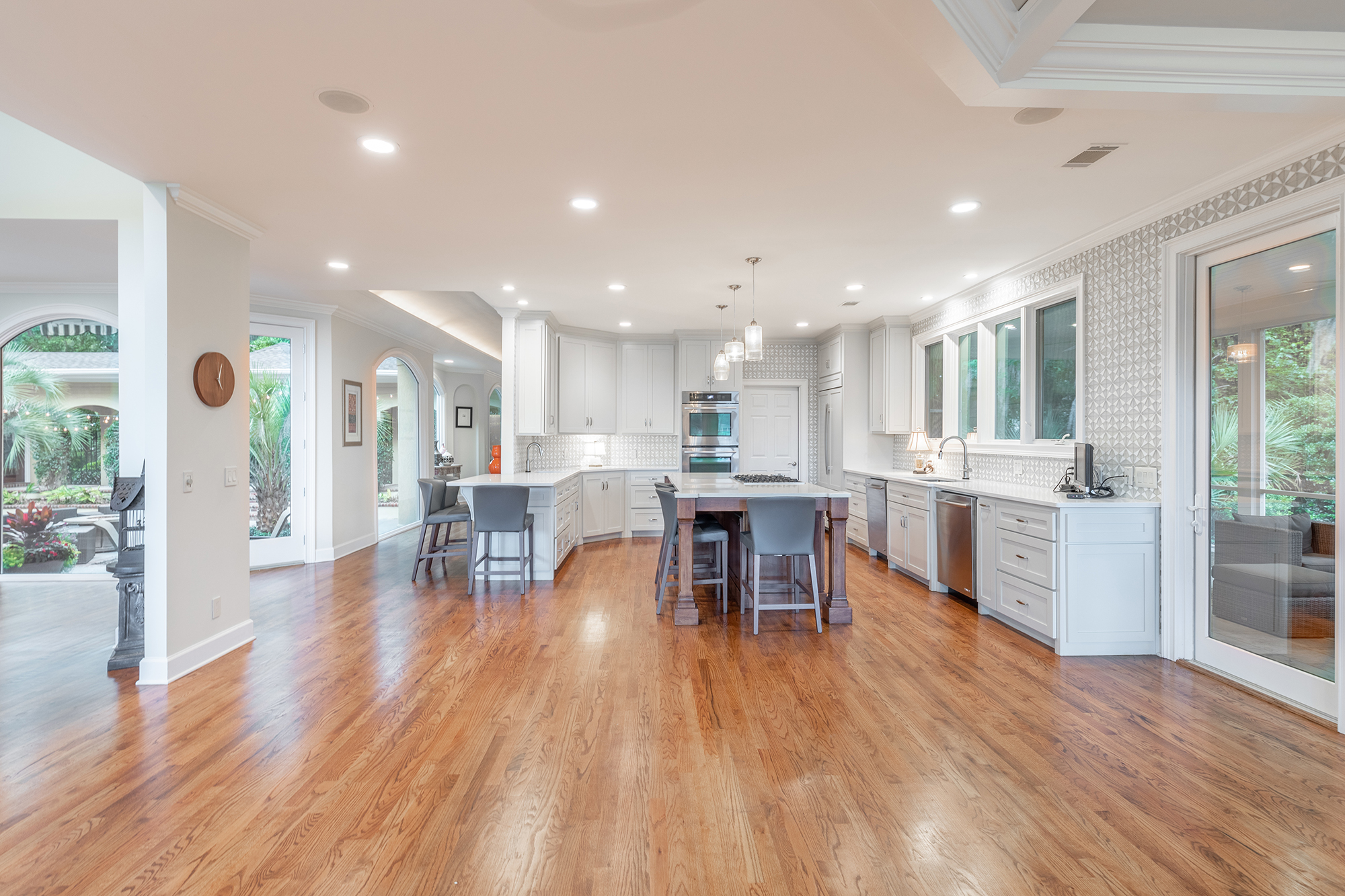
Hardwood floor cupping happens when the bottom of a wood plank has more moisture than the top. The edges of the board rise slightly higher than the center, creating a shallow “dish” shape across the width of the plank. It can look subtle at first, especially in natural light, but it often becomes more obvious when you walk across the room or see shadows between boards.
In Richmond homes, cupping is often tied to seasonal humidity, crawl-space moisture, plumbing leaks, or moisture trapped below the flooring system. The important point is this: cupping is not usually a finish problem. Sanding the floor before the moisture source is controlled can make the floor flatter for a short time, but it does not solve the imbalance causing the boards to move.
How humidity-related cupping usually looks
Humidity-related cupping is often spread across a larger area instead of appearing in one tight patch. You may notice it more during humid months, after long periods of rain, or when the air conditioning has not been controlling indoor humidity consistently. Rooms over crawl spaces, additions, and older sections of the home can be more vulnerable because the flooring system may be exposed to different moisture conditions from below.
A simple clue is whether the cupping appears across several boards in a wide pattern. If multiple rooms or large areas show similar movement, humidity may be part of the story. That does not mean the floor is ruined, but it does mean the home needs moisture diagnosis before cosmetic repair. Indoor humidity, subfloor moisture, and crawl-space conditions should be checked before any refinishing decision is made.
When the crawl space is the real problem
Crawl-space moisture can push water vapor into the subfloor and then into the underside of hardwood flooring. This is especially common when the crawl space has poor ventilation, exposed soil, missing or damaged vapor barriers, standing water, disconnected ductwork, or insulation that holds moisture. The flooring above may cup even when there is no visible water inside the room.
This is why homeowners sometimes say, “There is no leak, so why is my hardwood floor moving?” The leak may not be in the living space. The moisture may be coming from the environment below the floor. In this situation, replacing or refinishing the hardwood without correcting the crawl-space condition can lead to the same problem returning.
Signs that point to a hidden leak
A hidden leak usually creates a more concentrated pattern. The cupping may be worse near a refrigerator, dishwasher, toilet, washing machine, exterior door, supply line, or wall shared with plumbing. The boards may feel slightly soft, darkened, swollen, or rough at the seams. In some cases, the floor may also crown later if the surface dries faster than the underside or if the boards were sanded while still wet.
One useful homeowner test is to think about shape and location. A random patch near an appliance or bathroom wall deserves a leak investigation. A broad pattern over a crawl space may point toward vapor movement. A seasonal pattern that improves and worsens through the year may point toward humidity control. None of these clues replace proper moisture readings, but they help narrow the next step.
Why refinishing too early can make things worse
Refinishing a cupped hardwood floor before it has dried and stabilized can create a bigger problem. If the raised edges are sanded flat while the boards are still holding excess moisture, the boards may later dry and shrink into a crowned shape. That means the center of the board ends up higher than the edges, and the floor can look distorted even after professional sanding.
The better sequence is diagnosis first, moisture control second, and finish work last. A flooring professional should check moisture levels in the wood, compare them with the subfloor, and consider the crawl-space or leak conditions before recommending sanding, board replacement, or full replacement. The right repair depends on whether the wood has returned to stable moisture content and whether the boards are permanently damaged.
When to repair refinish or replace
Minor cupping caused by seasonal humidity may improve after humidity levels are controlled. Dehumidification, HVAC correction, crawl-space work, or fixing a small leak may allow the flooring to settle. If the boards are not cracked, loosened, stained, or permanently deformed, refinishing may be possible after the floor has stabilized.
Replacement becomes more likely when cupping is severe, repeated, accompanied by black staining, connected to long-term moisture exposure, or affecting boards that have lost structural integrity. If the floor has already been sanded multiple times, the remaining wear layer also matters. A floor with limited sanding life may not be a good candidate for another aggressive refinish, especially if the moisture issue has already distorted the boards.
Final thoughts for Richmond homeowners
Hardwood floor cupping is a symptom, not the full diagnosis. Before spending money on sanding or replacement, homeowners should understand whether the issue is coming from indoor humidity, crawl-space moisture, plumbing, appliance leaks, or a subfloor condition. Costen Floors can help homeowners compare flooring options, understand repair paths, and choose hardwood solutions that make sense for real Virginia homes.
For homeowners across Henrico, VA, Salem, VA, Richmond, VA, Virginia Beach, VA, Chesterfield, VA, and Midlothian, VA, visiting Henrico, Salem, Virginia Beach, and Midlothian, VA is a practical next step when hardwood floors are cupping, moving, or showing moisture-related changes.
Bring photos, note where the cupping appears, and contact us to discuss whether your floor needs inspection, refinishing guidance, replacement planning, or a better moisture-smart flooring option.


