


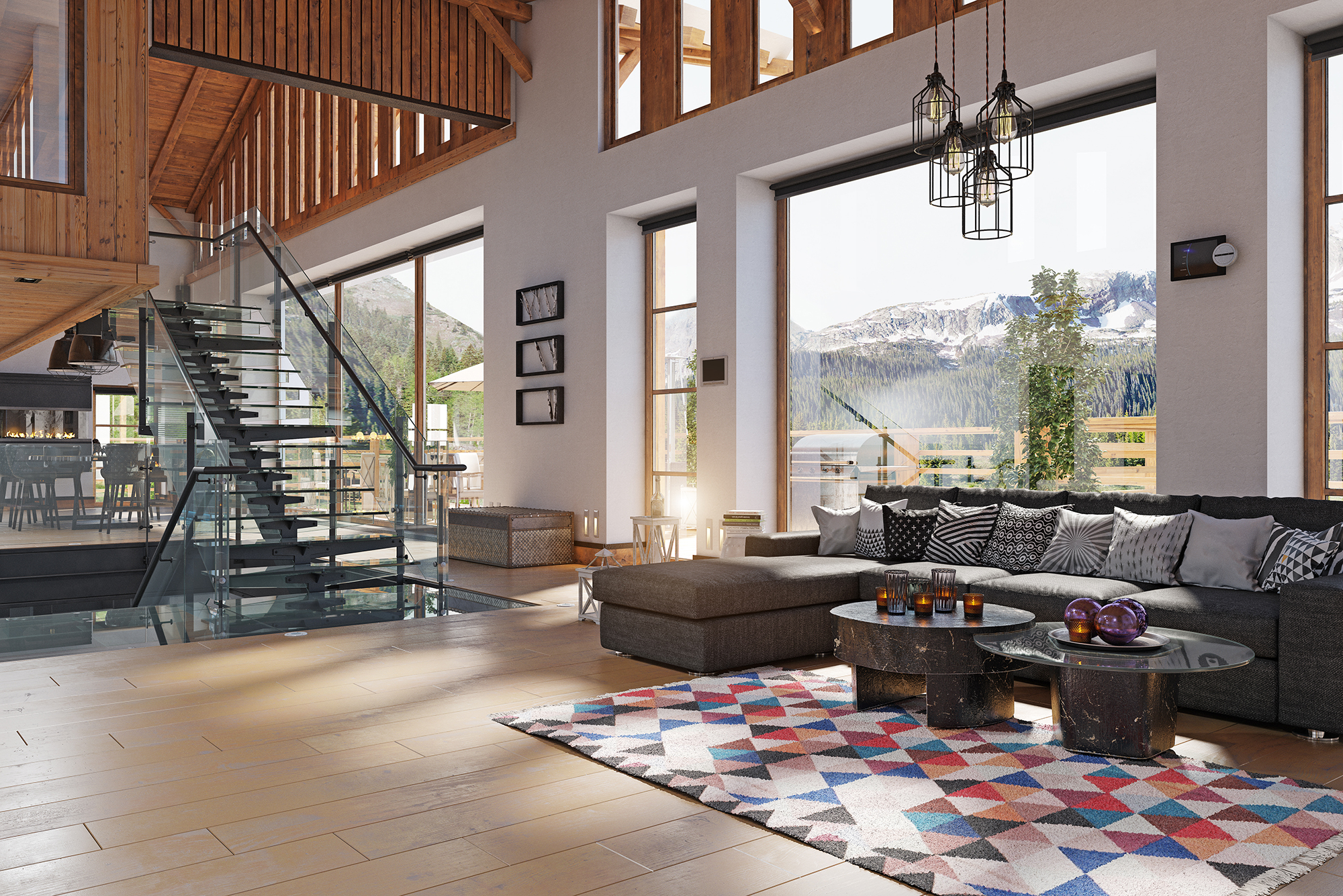
Open floor plans look spacious, but they can also make everyday sound travel farther than expected. Hardwood floors, tall ceilings, large windows, drywall, stone counters, and minimal window treatments all reflect sound instead of absorbing it. That is why conversations, footsteps, television noise, and chair movement can feel sharper in an open living space.
In many Richmond homes, the issue is not the hardwood itself. It is the number of hard surfaces working together. When a room has limited fabric, upholstery, curtains, books, or layered textiles, sound has nowhere soft to land. Area rugs help by breaking up that hard-surface chain while still allowing the hardwood floor to remain a major design feature.
Rug size matters more than people think
A small rug in a large open room can look decorative, but it usually will not solve much echo. Sound control improves when the rug covers the zone where people actually sit, walk, talk, and move furniture. In a living room, that often means the front legs of sofas and chairs should sit on the rug, or the entire seating group should be anchored on it if the room allows.
For open-concept layouts, the rug should define the activity area clearly. A rug that floats in the middle of the floor with furniture around it can make the space feel unfinished and acoustically thin. A properly sized rug creates a softer surface under the main furniture group, reduces footfall noise, and helps the room feel more settled instead of echoey and scattered.
The rug pad is part of the sound solution
A rug pad is not just there to stop slipping. The right pad can add cushioning, reduce impact noise, protect hardwood finish, and help the rug sit flatter. Felt pads are often useful under larger area rugs because they add density and comfort. A thin non-slip layer may be needed depending on the rug size, backing, and location.
Homeowners should be careful with cheap rubber, plastic, or PVC-style pads that are not approved for hardwood floors. Some lower-quality pads can stick, discolor the finish, trap moisture, or leave residue behind. For hardwood rooms, the safest choice is usually a breathable, hardwood-safe rug pad matched to the rug and floor finish. The pad should support comfort without creating a thick edge that becomes a trip point.
Pile height changes comfort and acoustics
Pile height affects how a rug feels and how much sound it absorbs. Low-pile rugs are easier to clean, better for dining chairs, and less likely to interfere with doors or furniture movement. Medium-pile rugs often give living rooms a stronger comfort upgrade because they add more softness underfoot and absorb more sound than very flat rugs.
High-pile or shag-style rugs can feel cozy, but they are not right for every open plan. They can be harder to clean, less stable under furniture, and more likely to show traffic paths. For busy Richmond homes with pets, children, or frequent guests, a medium pile with a dense pad often gives the best balance of comfort, sound control, and practical maintenance.
Fiber choice affects noise durability and cleaning
Wool is a strong choice for comfort, resilience, and natural sound absorption. It tends to spring back well under furniture and foot traffic, which helps a rug keep its shape over time. Wool can cost more upfront, but it often performs well in living spaces where the rug is expected to work hard and still look refined.
Synthetic fibers can also make sense, especially in homes with pets, kids, or high spill risk. Nylon, polyester, and polypropylene rugs vary widely in quality, so homeowners should look at density, backing, cleanability, and how the surface feels in person. A rug that looks good online may feel thin, shiny, or stiff once placed over hardwood, so texture should be judged with both design and performance in mind.
Where to place rugs in an open layout
The biggest mistake is treating one open floor plan as one giant room. Most open layouts work better when they are divided into zones. A living area rug can soften conversation and television noise. A dining rug can reduce chair scraping and make the dining zone feel more intentional. A runner in a long walkway can reduce footstep noise between spaces.
The placement should follow how the home is actually used. If sound bounces most around the sofa and television area, that is where the largest and most substantial rug should go first. If chair movement is the main issue, the dining zone may need attention. If the home feels loud from the front door onward, entry rugs and runners can help reduce the sharpness of daily traffic.
How to keep hardwood visible without making the room loud
Many homeowners hesitate to add rugs because they do not want to cover their hardwood floors. That concern makes sense, especially when the flooring is one of the best visual features of the home. The goal is not to hide the hardwood. The goal is to frame it, protect it, and soften the way the room behaves.
Leaving a consistent border of visible hardwood around the rug helps the floor stay part of the design. In larger rooms, oversized rugs usually look more polished than small rugs because they make the furniture feel connected. The hardwood still shows around the edges, through transitions, and in walking paths, while the rug does the practical work of making the room quieter and more comfortable.
Final thoughts for Richmond homeowners
Area rugs are one of the most effective ways to make an open hardwood room feel quieter without changing the flooring itself. The right result depends on rug size, pad quality, pile height, fiber type, and placement. Costen Floors can help homeowners choose area rugs that improve comfort, reduce echo, protect hardwood floors, and still fit the style of the home.
For homeowners across Henrico, VA, Salem, VA, Richmond, VA, Virginia Beach, VA, Chesterfield, VA, and Midlothian, VA, visiting Henrico, Salem, Virginia Beach, and Midlothian, VA is a practical way to compare rug textures, sizes, pads, colors, and hardwood-safe options in person. If your open floor plan feels loud, unfinished, or uncomfortable underfoot, contact us to find an area rug solution that makes the room feel better to live in.


