


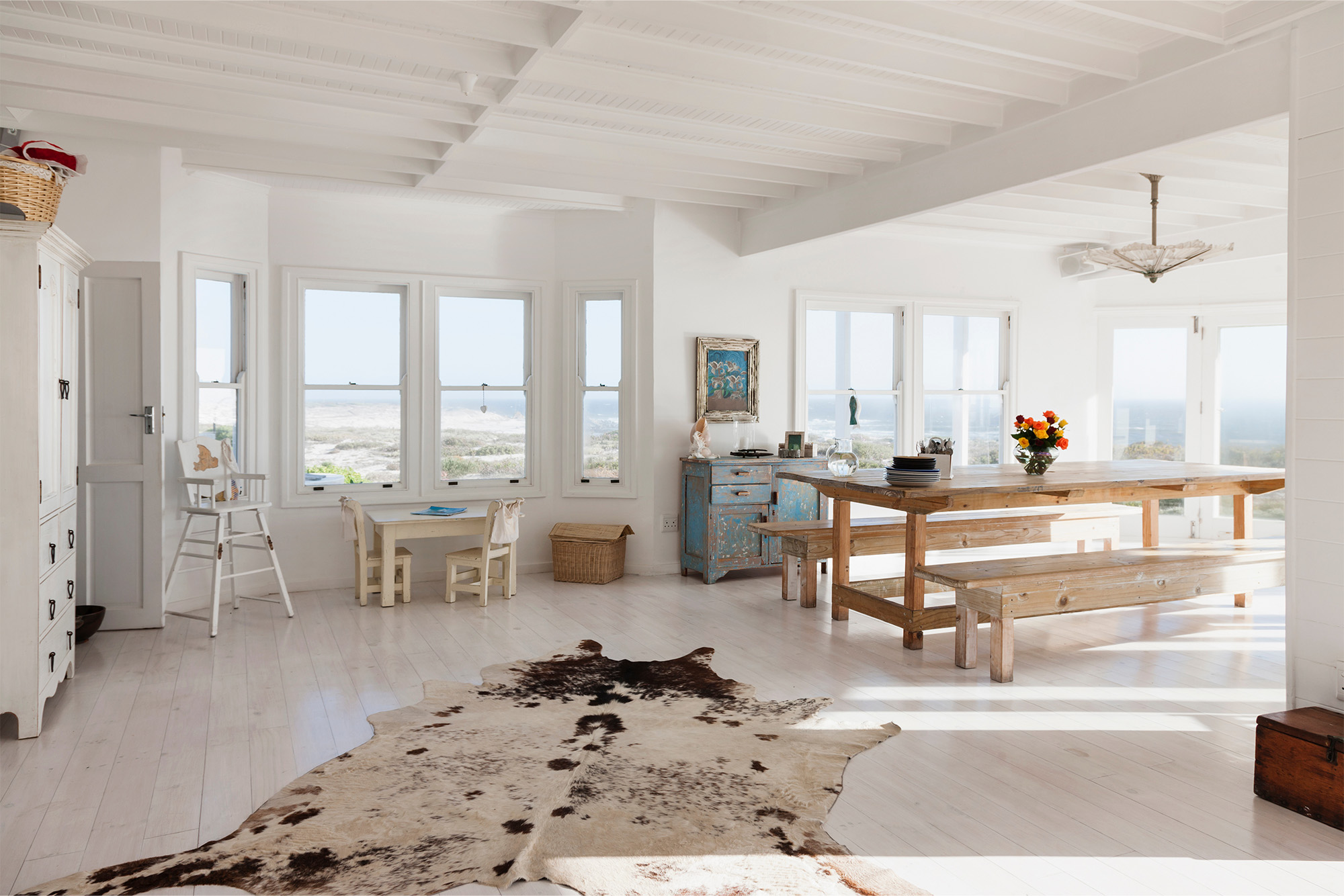
The biggest area rug mistake is measuring the room and forgetting the furniture. A rug does not need to fill the entire room. It needs to anchor the conversation zone. In open-plan living spaces, this distinction matters because the living area may share sightlines with the kitchen, dining area, hallway or staircase. The rug has to create a room inside the room.
Start by measuring the actual seating group. Include the sofa or sectional, accent chairs, coffee table and the walking path around them. In most cases, the front legs of the main seating pieces should sit on the rug, or the rug should be large enough to hold the entire arrangement. A rug that floats under only the coffee table usually makes the furniture feel disconnected.
Sectionals need stronger anchoring
Sectionals are visually heavy, so they need a rug that feels intentional. If the rug is too small, the sectional can look like it is swallowing the room. If the rug is too large, it can run into dining chairs, kitchen islands or exterior doors. The right size creates a clean boundary around the seating area without blocking movement through the space.
For L-shaped sectionals, the rug should usually extend beyond the inside corner and support the main length of the seating. For chaise sectionals, the rug needs to account for the chaise depth, not just the sofa length. This is where many homeowners choose a rug that looks correct online but feels undersized in the room. The furniture footprint should drive the rug size.
Swivel chairs need clearance and balance
Swivel chairs complicate rug layouts because they move. They may face the sofa, turn toward a fireplace, rotate toward a kitchen or shift toward a window view. If the rug is too small, the chair can catch on the rug edge or feel visually separate when turned. If the pile is too thick, the chair may not move comfortably.
A good swivel-chair layout gives the chair enough room to sit fully or mostly on the rug while still allowing rotation. Low-pile rugs are often easier for active seating areas, especially where chairs move frequently. Pattern scale also matters. A small busy pattern can become visually jumpy under rotating furniture, while a larger or more grounded pattern can help the room feel calmer.
Use rugs to fix awkward open-plan rooms
Open-plan rooms often feel awkward because there are too many invisible zones. A rug can define the living area, but only if it relates to the furniture, flooring and traffic flow. In homes with hardwood floors, the rug should add comfort and acoustic softness without hiding the floor completely. The aim is balance, not coverage.
At Costen Floors, homeowners can compare area rug sizes, textures and patterns alongside hardwood and laminate flooring samples. For help choosing rugs and flooring in Henrico, VA, Salem, VA, Richmond, VA, Virginia Beach, VA, Chesterfield, VA, and Midlothian, VA, visit Henrico, Salem, Virginia Beach, and Midlothian, VA or contact us to find an area rug layout that makes the room feel finished, functional and easier to live in.


