


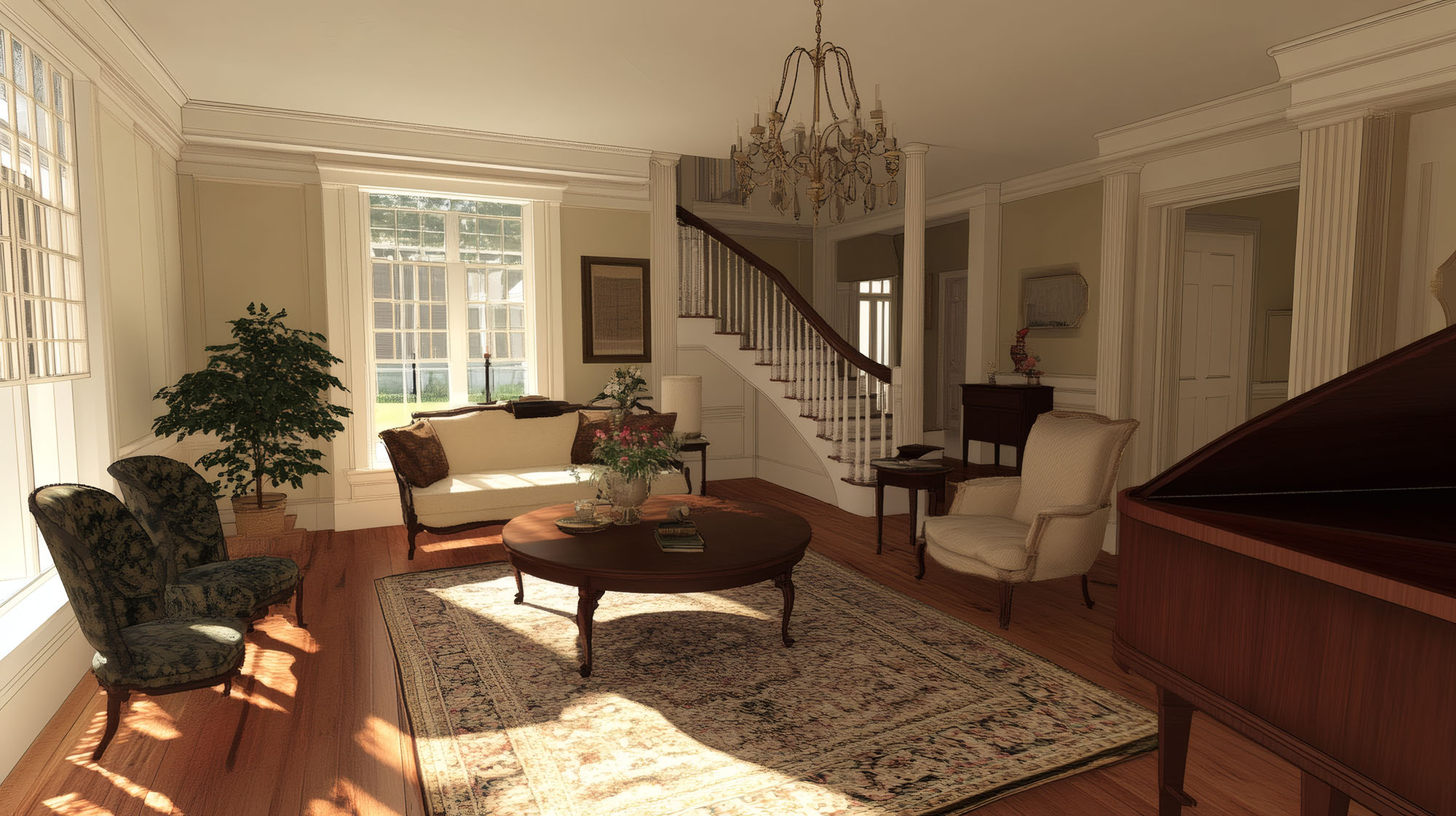
There is a quiet assumption in most floor care advice that moving furniture is what damages hardwood. Dragging a sofa certainly scratches a finish, but the deepest, most permanent damage tends to show up under the pieces that never move at all. A china cabinet, a grand piano, a bookcase loaded with hardbacks, all sitting in exactly the same position for a decade, do something to wood that a scratch never does.
Static Load Compresses Wood Fiber Permanently
Wood is a cellular material, and under sustained pressure those cells compress. A short term load lets the wood spring back once the weight is removed, but a load held in place for months or years eventually exceeds what the fiber can recover from. That is why lifting an old piece of furniture often reveals indentations that do not fade even after weeks of being uncovered.
This process is slow and invisible while it happens, which is exactly why it catches people out. Nothing looks wrong until the room gets rearranged or the house gets sold, and by then the compression has usually set. Softer species show it sooner than harder ones, but no species is immune to it, since this is a property of wood itself rather than a defect in any particular floor.
Why Small Feet Do More Damage Than Heavy Furniture
Weight alone is not what causes the dent. Pressure is weight divided by contact area, so a lightweight side table balanced on four narrow metal legs can mark a floor more severely than a far heavier sofa resting on wide wooden feet. This is the detail most guidance leaves out, and it reverses the instinct most people have about which pieces to worry about.
Piano casters are the classic example. A piano is extremely heavy, but the real problem is that its entire mass sits on three small wheels. Antique furniture with slender turned legs, mid century pieces on thin tapered metal legs, and anything on narrow glides all concentrate pressure in the same way, regardless of how light the piece feels to lift.
Pads Help But Only the Right Kind
Standard felt pads do a good job against scratching when something shifts, but they compress under long term static load and then stop distributing weight effectively. For furniture that genuinely never moves, the better approach is a rigid load spreader, meaning a wider, firm cup or coaster that increases the contact area rather than cushioning it.
The principle is straightforward: double the contact area and halve the pressure on the wood. Caster cups under a piano, wide furniture coasters under cabinet feet, and purpose made glides under narrow legged pieces all work on this basis. Rubber pads need a little caution, since some rubber compounds can react with floor finishes over long contact periods, so pads specifically rated for hardwood are the safer choice.
Humidity Makes Static Dents Worse in Virginia Homes
Wood that carries more moisture is softer and compresses more readily, which means the same piece of furniture does more damage during a humid Central Virginia summer than it does in dry winter conditions. Homes that let indoor humidity swing widely through the seasons effectively give the furniture a window every year where the floor underneath it is at its most vulnerable.
Keeping indoor humidity reasonably stable through the year helps on this front just as it helps with gapping and cupping. It will not eliminate static compression, since that is a function of time and pressure, but it does slow it down meaningfully in the months when the risk is highest.
Moving Heavy Pieces Slightly Is Worth the Effort
Shifting an immovable piece of furniture even an inch or two once or twice a year gives the compressed wood underneath a chance to recover before the compression becomes permanent. This is a small habit with a disproportionate payoff, and it costs nothing beyond the effort of the move itself.
Lifting rather than sliding is the rule here. Sliding a heavy piece even a short distance risks a long scratch across the finish, which trades one kind of damage for another. For genuinely heavy items like a piano or a loaded cabinet, two people and furniture sliders designed for hard floors are worth the setup time.
Protect the Floors You Already Love
Costen Floors works with homeowners across Henrico, VA, Salem, VA, Richmond, VA, Virginia Beach, VA, Chesterfield, VA, and Midlothian, VA on both new hardwood and the care that keeps existing floors in good shape, and the team at Henrico, Salem, Virginia Beach, and Midlothian, VA is happy to talk through protection for heavy or awkward furniture before damage sets in.
Browse the hardwood flooring selection to see species and finish options, or contact us with questions about protecting a floor you already have.


