


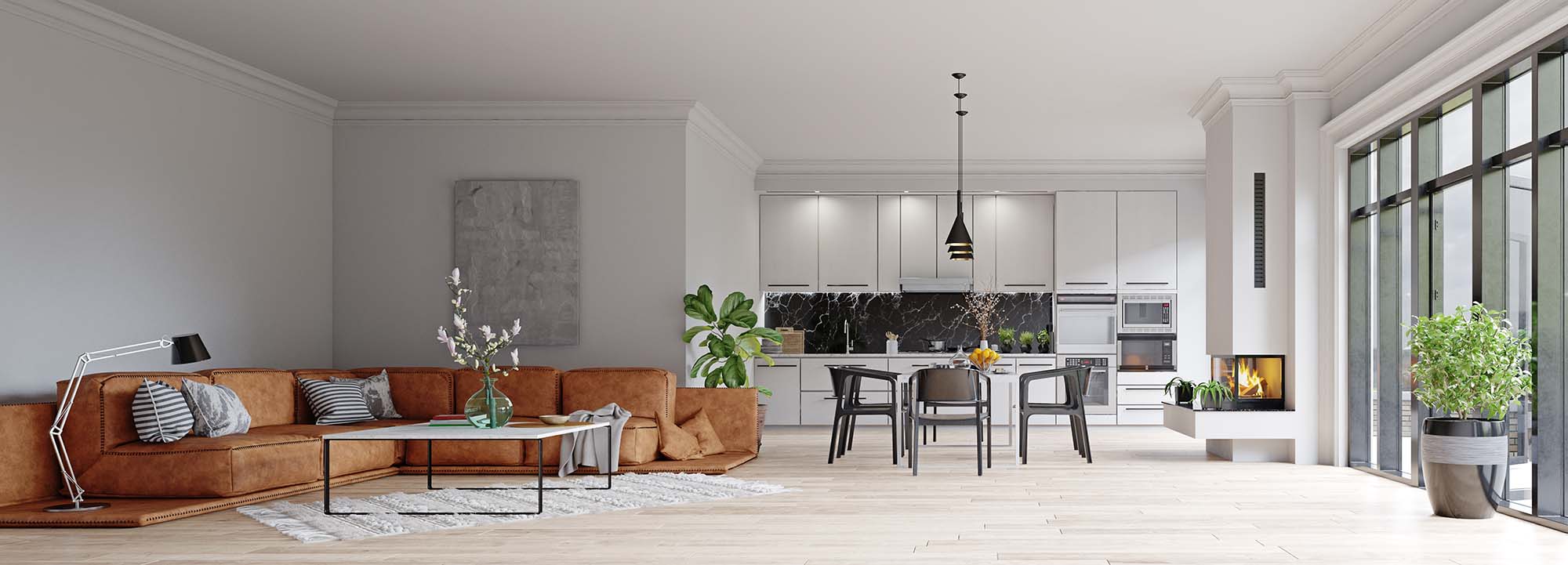
Why open plans make matching harder
In a traditional home, a threshold between rooms gives you a natural place to change flooring, and small differences in tone or species go unnoticed. Open plan homes, which describe a lot of the newer construction around Short Pump, remove that escape hatch. The kitchen, dining, and living areas flow together in one continuous sightline, so any mismatch in color, width, or sheen sits in plain view all day.
That's why "just buy the same wood" rarely solves it. Even identical species and stain look different once the existing floor has aged, oxidized, and taken on the patina of years of light exposure. New boards laid beside old ones almost always read as a patch, no matter how careful the color selection. Matching is less about buying the same product and more about getting old and new to finish as one floor.
Get the species, width, and direction right first
Start by identifying what you already have. Most Richmond area homes use red oak or white oak, but the grain, plank width, and board direction all have to line up before color even enters the picture. A new floor in 5 inch planks beside an existing 2 and a quarter inch strip floor will never blend, because the proportions clash before anyone notices the stain.
Direction matters just as much. New boards should run the same way as the existing run, and where the two floors meet, the boards need to be woven together rather than butted in a straight line. This technique, called lacing or feathering, staggers the new boards into the old so there's no hard seam telling your eye where the addition begins. It's detailed work, and it's where experienced installers earn their keep.
The honest answer about color matching
Here's the part homeowners don't always want to hear. The most reliable way to truly match new hardwood to existing floors is to install the new wood raw, then sand and refinish the entire area, old and new together, with the same stain and finish in one pass. When everything is sanded and coated at the same time, the color is uniform by definition, and the patina resets across the whole floor.
Trying to match prefinished new boards to an aged existing floor is a much tougher road. You're chasing a moving target, because the old floor's color came from years of aging that a factory finish can't replicate. Sometimes a close prefinished match is good enough for a budget or a timeline, but for a seamless open plan result, finishing on site is almost always the answer. Costen Floors can assess your existing floor and tell you honestly which route will actually look right.
Don't forget acclimation and sheen
New wood has to acclimate inside your home for several days before installation so its moisture content settles into the same range as the existing floor and your indoor air. Skip this in Virginia's humidity and the new boards can shrink or swell after install, opening gaps or cupping right at the seam you worked so hard to hide. Proper acclimation is not optional for a clean blend.
Sheen is the last detail and the one people forget. A satin existing floor next to a semi-gloss addition will catch light differently and give the patch away even when the color is perfect. Matching the finish sheen, satin to satin, matte to matte, is part of making the two floors read as one continuous surface.
Bring in a floor that flows seamlessly
Matching hardwood in an open plan is precise work, and the difference between a professional blend and a visible patch shows up the moment the light hits it.
Talk to Costen Floors about your existing floor, and we'll measure your space, evaluate your options, and recommend whether to lace in new boards and refinish or pursue a prefinished match. We proudly serve Henrico, VA, Salem, VA, Richmond, VA, Virginia Beach, VA, Chesterfield, VA, and Midlothian, VA, with hardwood specialists and an in-home measurement team working from Henrico, Salem, Virginia Beach, and Midlothian, VA. When you want your new and existing floors to look like they were always one, contact us to get started.


