


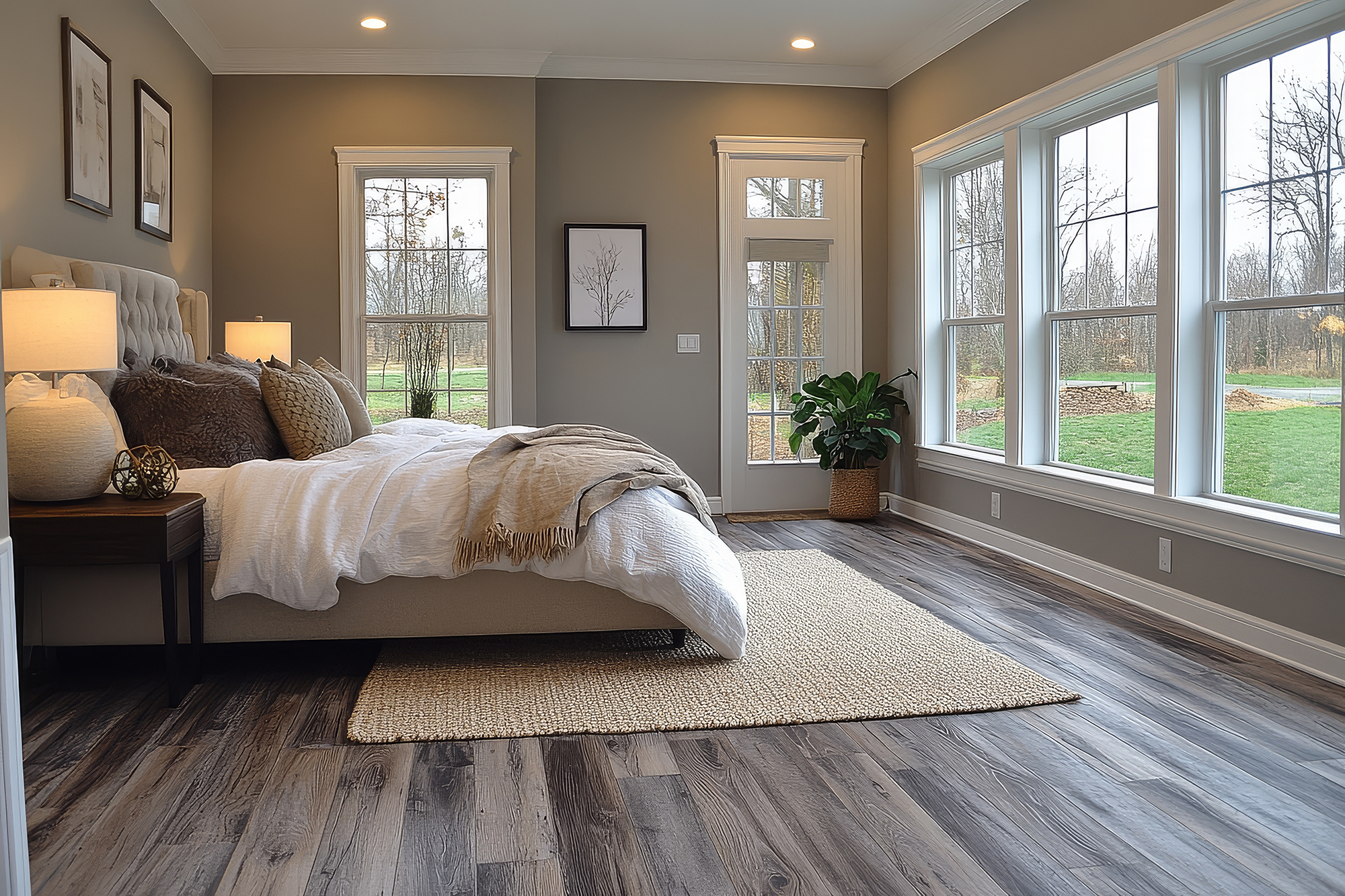
Seasonal rug swaps usually get framed as an either or decision, pack away the flatweave and bring out something heavier once it cools down. Layering skips that swap entirely and gives a room two functional rugs working together, which turns out to solve a few practical problems that a straight swap does not.
Why the Flatweave Should Stay Down, Not Get Replaced
A flatweave rug is thin and low profile by design, which makes it a natural base layer rather than something that needs to be removed before a heavier rug goes down. Leaving it in place under a wool layer adds a bit of extra cushioning and helps prevent the wool rug from sliding, especially on hardwood or laminate where a single rug can shift more than expected.
This also means the flatweave keeps doing its summer job of protecting the floor underneath, just with a second layer now sitting on top of it for the cooler months. Nothing about the room's underlying protection changes, the visual and tactile experience on top does.
Sizing the Wool Layer Against the Flatweave
The wool rug going on top generally works best when it is noticeably smaller than the flatweave underneath, leaving a visible border of the base layer showing around the edges. A common approach is sizing the wool piece at roughly two thirds the size of the flatweave, which creates a clear layered look rather than one rug simply hiding the other.
Placement matters here too. Centering the wool rug, or offsetting it slightly toward a seating area or the foot of a bed, both work depending on the room, but keeping the flatweave's border visible on at least two sides is what makes the layering read as intentional rather than like two mismatched rugs that happened to end up in the same spot.
Texture and Color Pairing That Actually Works
Wool naturally reads warmer and denser than most flatweave fibers, which is exactly the contrast that makes layering effective as temperatures drop. A patterned or textured flatweave paired with a solid, deep toned wool rug tends to look more deliberate than pairing two busy patterns together, since the eye has one clear focal point instead of competing designs.
Color wise, choosing a wool rug that pulls one tone from the flatweave's pattern, rather than an entirely unrelated color, ties the two layers together visually. This is a small detail that separates a layered look that feels curated from one that feels like two separate purchases stacked on top of each other.
Practical Upsides Beyond the Look
A layered setup gives a genuine warmth boost underfoot once the weather turns, since wool traps more air and insulates better than a thin flatweave alone, particularly on hardwood or laminate floors that already run cooler in the fall and winter months. This is a real functional benefit, not just a styling choice, especially in rooms where people sit or stand for long stretches, like near a reading chair or a kitchen island.
The wool layer also takes the brunt of daily wear during the season it is down, which means the flatweave underneath stays in better condition since it is partially protected rather than absorbing all the foot traffic on its own.
Storing and Rotating Between Seasons
When it is time to switch back for warmer months, the wool layer comes up first and can be stored flat or rolled, ideally with a cedar block or lavender sachet nearby to deter moths during the off season. The flatweave can either stay down through summer as it did before, or come up too if the room benefits from bare floor during warmer months.
Keeping both rugs in reasonable condition between seasons means this layering approach can repeat every year without needing to replace either piece, which makes it a more sustainable long term habit than swapping rugs out entirely each season.
Costen Floors carries both flatweave and wool area rugs suited to layering, for homeowners across Henrico, VA, Salem, VA, Richmond, VA, Virginia Beach, VA, Chesterfield, VA, and Midlothian, VA looking to transition a room through the seasons. The team at Henrico, Salem, Virginia Beach, and Midlothian, VA can help pair sizes, textures, and colors that work together rather than compete.
Browse the area rug selection to find pieces that pair well for layering, or contact us with questions about building a seasonal rug setup.


