


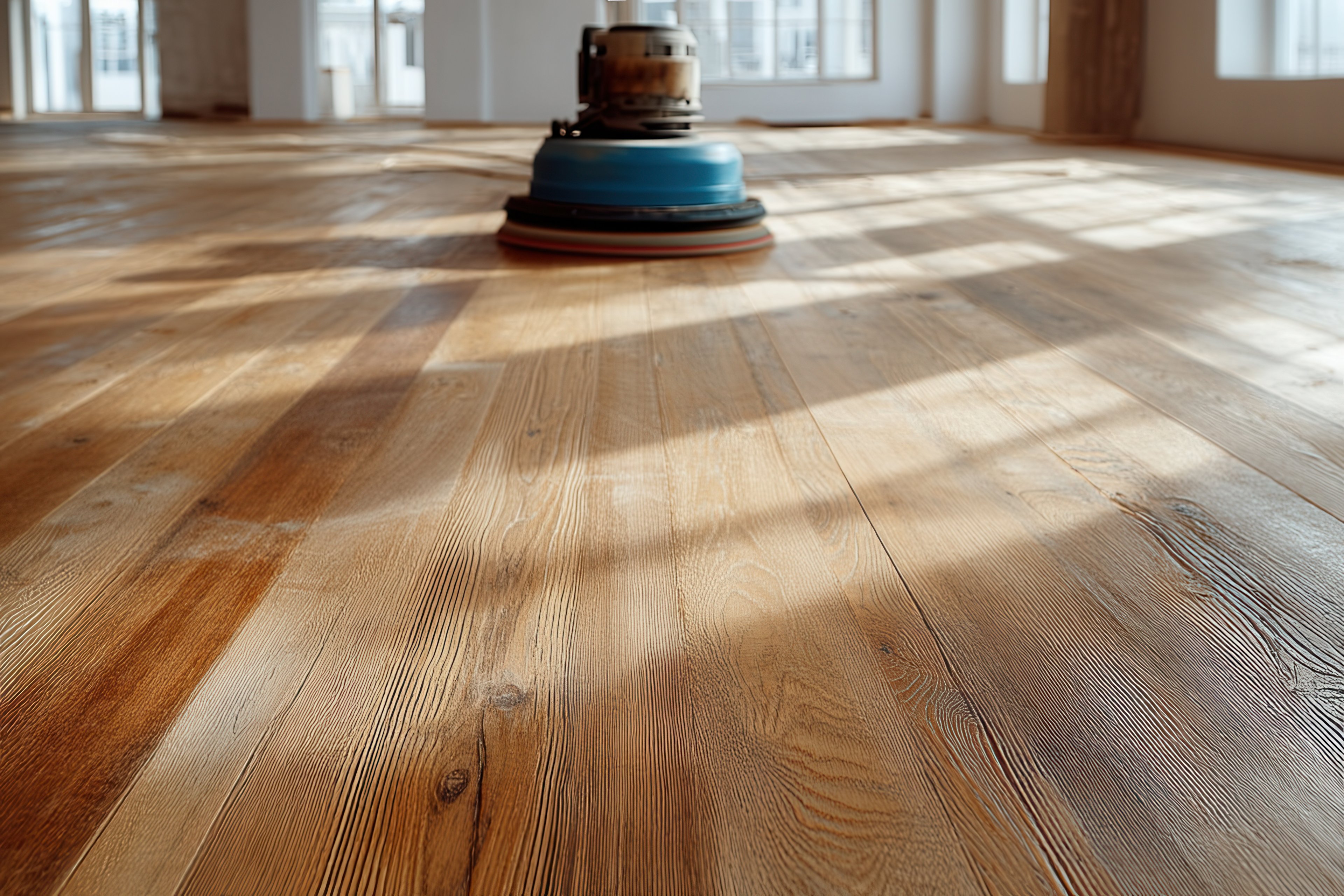
Refinishing a hardwood floor removes a thin layer of wood with each pass of the sander, and that layer does not come back. Solid hardwood can typically be refinished several times over its life, while engineered hardwood has a much thinner wear layer and a hard limit on how many times it can go through the process. Most homeowners schedule a refinish based on how tired the floor looks, without ever checking whether the wood has enough material left to safely sand again.
Checking Wear Layer Thickness Before Committing
For engineered hardwood, the wear layer thickness is usually listed in the original product documentation or can be measured directly at a vent register or heating grate where the edge of a board is exposed. A wear layer of two millimeters or more can typically handle one more light refinish, while anything thinner than that is a sign the floor is close to or past the point where sanding would expose the plywood core underneath.
Solid hardwood does not have this same hard limit, since the entire board is one species of wood rather than a thin veneer over a core, but it is not limitless either. A board that has already been refinished three or four times may be getting thin enough that another full sanding brings it dangerously close to the nail line, which is the depth where flooring nails sit just under the surface.
Two millimeters or more of wear layer generally supports one more light refinish
Nail lines becoming visible after a light sanding pass signal the board is near its limit
Reading the Signs Without Removing Any Boards
A quick visual check can reveal a lot before ever calling in a professional. Look closely at areas near vents, heat registers, or any spot where a board edge is visible, since these are the easiest places to estimate remaining material without pulling anything up. If the wood looks noticeably thin or if a previous sanding pass has left visible unevenness at seams, that floor is likely nearing its limit.
Another sign worth checking is how the floor sits in high traffic areas compared to areas that see little foot traffic, like under furniture or in a rarely used corner. A big difference in wear level between these two areas suggests the floor has already lost a fair amount of material in the busy zones, even if the overall floor still looks presentable.
What Happens If a Floor Gets Sanded Too Far
Sanding past the safe depth on solid hardwood exposes the flooring nails, which then need to be set deeper or replaced entirely before the floor can be finished, adding cost and complexity to what was supposed to be a routine refinish. On engineered hardwood, sanding through the wear layer exposes the plywood core, which cannot be refinished and effectively ends that board's life.
This is not a reversible mistake, which is why checking wear layer thickness or board condition before scheduling a refinish matters more than it might seem. A professional flooring contractor can typically make this assessment quickly during an initial visit, before any sanding equipment comes out.
When Refinishing Is Not the Right Call Anymore
A floor that has reached its final safe refinish, or gone past it, is not necessarily a floor that needs to be torn out. Homeowners in this position often have real choices, from a lighter recoat that adds a fresh top layer of finish without sanding down to bare wood, to replacing just the most worn boards while keeping the rest of the original floor intact.
New hardwood installation is also a reasonable option when a floor has genuinely reached the end of what refinishing can offer, particularly if the existing wood species or plank width no longer fits the look of the home. Neither path is automatically the right one for every situation, and the choice usually comes down to the floor's actual condition rather than a fixed rule.
Costen Floors works with homeowners across Henrico, VA, Salem, VA, Richmond, VA, Virginia Beach, VA, Chesterfield, VA, and Midlothian, VA to assess whether a hardwood floor has another refinish left in it, and to walk through recoat, repair, or replacement options when it does not. The team at Henrico, Salem, Virginia Beach, and Midlothian, VA can take a look at wear patterns and board condition before recommending a path forward.
Browse the hardwood flooring selection to see replacement options if a floor has reached its limit, or contact us to schedule an assessment of your existing floor.


