


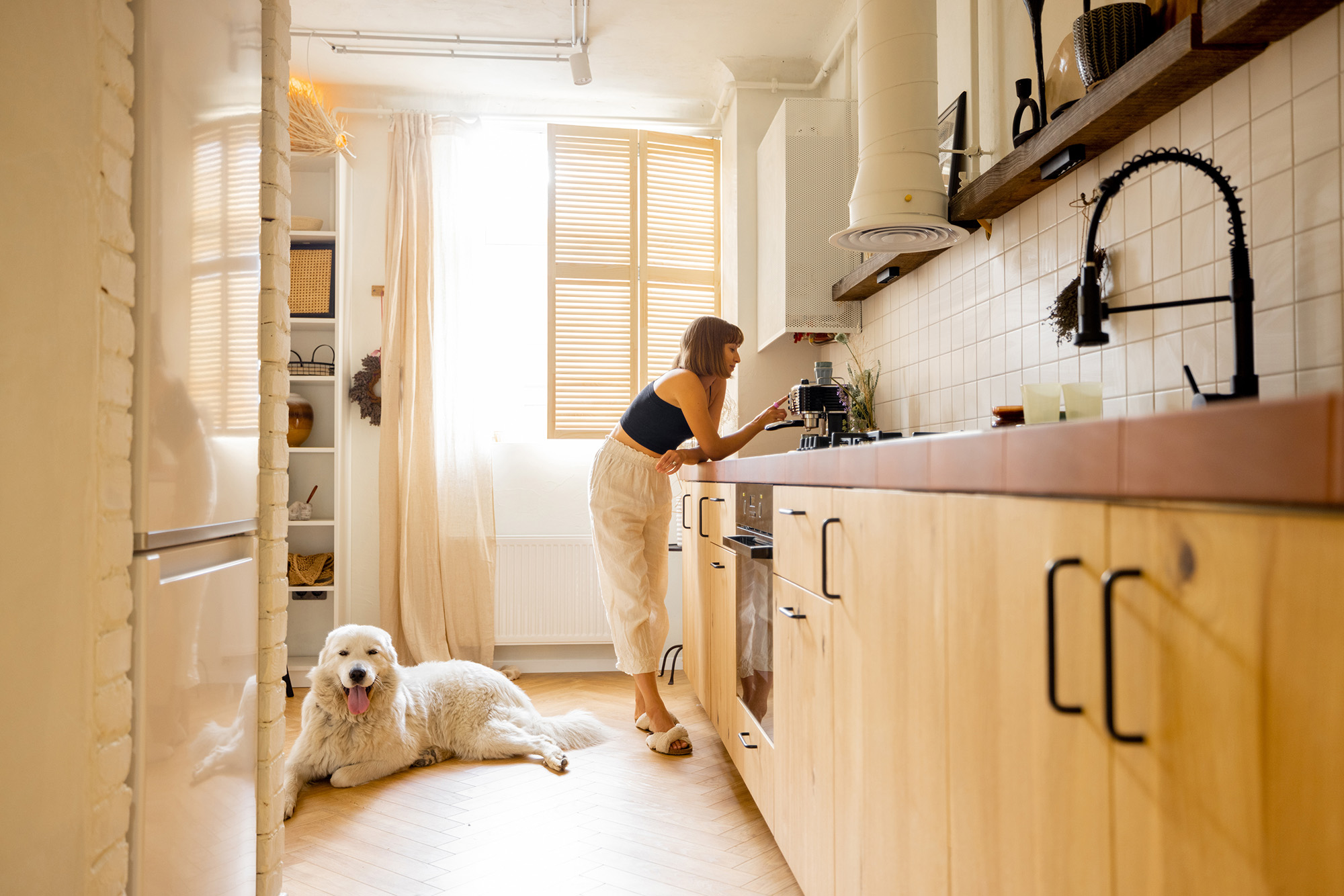
When homeowners ask about hardwood floors and dog nails, the first question is usually, “Which wood is hardest?” Hardness matters, but it is only one part of the decision. A harder floor can still show scratches if the finish is glossy, the color is very dark or the grain is too smooth to hide everyday marks. In real homes, scratch visibility is often just as important as dent resistance.
Dog nails usually affect the finish layer before they damage the wood itself. That means finish sheen, surface texture, stain color and maintenance habits all matter. A matte or low-sheen floor will usually hide fine marks better than a glossy floor. A floor with visible grain can also disguise small scratches better than a very uniform surface, especially in busy kitchens, hallways and family rooms.
How white oak, hickory, maple and red oak compare
White oak is one of the most practical choices for dog-friendly hardwood because it has a balanced grain pattern and works well with modern warm stains. It does not look overly busy, but it has enough texture to hide light wear better than a very plain species. It also pairs well with matte finishes, wire-brushed textures and wider plank styles.
Hickory is harder and more dramatic, which can be useful in active homes, but its strong variation is not for everyone. Maple is dense, but its cleaner grain can make scratches easier to notice in certain finishes. Red oak has a more open grain and can hide wear well, but stain selection matters because some tones can lean orange or dated if not chosen carefully. The right answer depends on the dog, the room and the look you want to live with every day.
Finish and texture can change everything
A homeowner with a large dog may be better served by a medium-tone, textured hardwood than by a very hard species in a dark glossy finish. Dark floors can look beautiful, but they often show dust, paw prints and fine scratches more clearly. High-gloss finishes can create the same problem because every mark catches the light.
Wire-brushed, hand-scraped or lightly textured hardwood can help make everyday wear less obvious. A matte or satin finish is usually easier to live with than a shiny one. If the dog runs through the same hallway every day, or launches from the sofa in the same spot, it is worth thinking about traffic paths before choosing the floor. The floor should match the reality of the home, not just the showroom sample.
Choosing hardwood for a real dog household
Good hardwood planning for pets includes more than species selection. Keep nails trimmed, place rugs or runners in high-speed zones and use entry mats where dogs bring in grit. Small grit particles can behave like sandpaper under paws, which is why cleaning habits matter almost as much as the material itself.
At Costen Floors, homeowners can compare hardwood species, finishes and textures in person before deciding what will work best for dogs, furniture and daily traffic. For hardwood flooring guidance across Henrico, VA, Salem, VA, Richmond, VA, Virginia Beach, VA, Chesterfield, VA, and Midlothian, VA, visit Henrico, Salem, Virginia Beach, and Midlothian, VA or contact us to choose a floor that looks good on day one and still makes sense after real life begins.


