


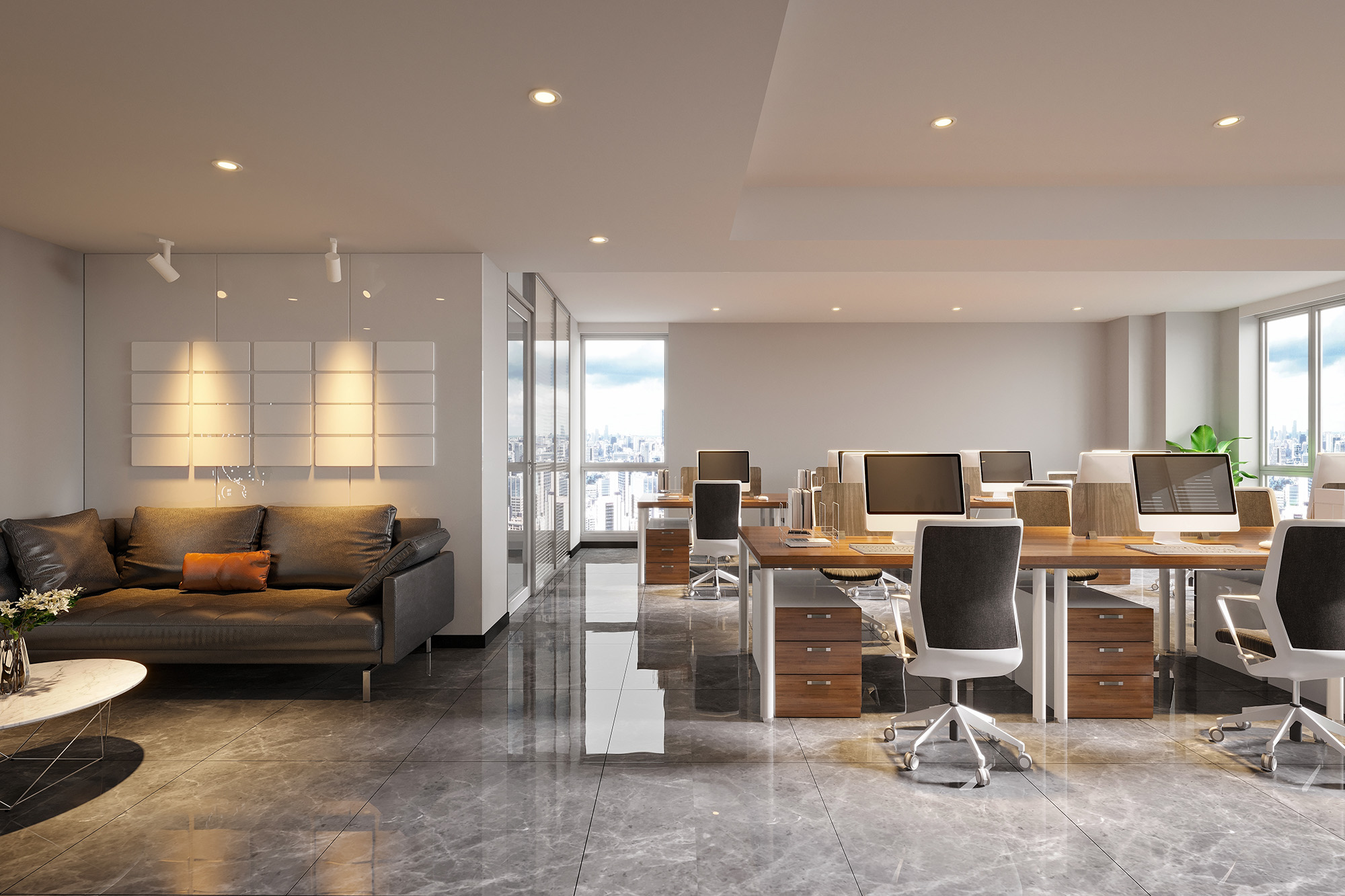
Most rug advice assumes people walk across a rug. A home office rug deals with something different entirely: a weighted chair on five small wheels, rolling back and forth across the same twelve inches of surface, several hundred times a week. That is a concentrated, repetitive load, and it breaks rugs in ways that have nothing to do with how much foot traffic the room gets.
Why Casters Damage Rugs Differently Than Footsteps
A footstep distributes body weight across the whole sole of a shoe, spreading the pressure over a wide area for a fraction of a second. A caster does the opposite. It concentrates the combined weight of the chair and whoever is sitting in it onto five contact points roughly the size of a coin, and then drags those points sideways across the fibers rather than pressing straight down.
That sideways drag is the real problem. It pulls at the pile rather than compressing it, which is why office rugs often show fuzzing, pilling, or visible track lines long before they show the general flattening you would expect from ordinary wear. The damage also concentrates in a predictable zone, usually a semicircle behind the desk, which means a rug can look pristine everywhere except the one area people actually look at.
Pile Height Is the Single Biggest Factor
Low pile and flatweave construction handle caster traffic far better than anything plush, and the reason is mechanical rather than aesthetic. A caster needs a firm, relatively flat surface to roll across. On a high pile rug, the wheel sinks into the fibers and then has to push through them with every movement, which both makes the chair harder to move and puts constant lateral strain on the pile.
Anything under roughly a quarter inch of pile height generally lets a caster roll rather than plow. Flatweaves, low pile wool, and tightly constructed synthetics all fall into this range. Shag, deep plush, and high pile styles are lovely rugs, they just belong in a reading corner or bedroom rather than under a rolling chair.
Density Matters More Than Fiber Type
Fiber choice gets most of the attention in rug shopping, but for caster traffic, how tightly the rug is constructed matters more than what it is made from. A densely woven wool and a densely woven synthetic will both outperform a loosely constructed version of either, because density is what stops individual fibers from being pulled loose when a wheel drags across them.
A quick way to check density in person is to press a thumb firmly into the pile and then bend a corner of the rug backward. A dense rug resists the thumb and shows very little backing through the fibers when bent. A loose one gives easily and reveals gaps, and those gaps are exactly where caster wear starts.
Backing and Movement Under a Rolling Chair
A rug that shifts even slightly under a rolling chair becomes a daily irritation, because every push off the desk nudges it a little further out of position. A rug with a firm backing, paired with a grippy pad sized correctly for the rug, stops that creep. The pad needs to be slightly smaller than the rug so the edges still lie flat, since a caster hitting a raised rug edge is the most common cause of both bunching and that jarring stop mid roll.
Pad choice also depends on what sits underneath. On hardwood, laminate, or LVP, a thin, breathable pad made for hard surfaces keeps the rug in place without trapping moisture against the floor. Thicker cushioned pads work against a rolling chair anyway, since the extra give makes the caster sink rather than roll.
Color and Pattern for a Room With Concentrated Wear
Because caster wear concentrates in one zone rather than spreading evenly, a solid light colored rug will show that zone more obviously than a patterned or mid tone rug will. A subtle pattern or a heathered, multi tonal weave disguises the gradual change in texture that happens in the chair zone, which buys the rug a longer useful life in the room.
Rotation helps here too, more than in most rooms. Turning an office rug a quarter or half turn every few months moves the chair zone to a fresh section of pile, which spreads the wear instead of letting it concentrate in one permanent patch behind the desk.
Find a Rug Built for a Working Room
Costen Floors helps homeowners across Henrico, VA, Salem, VA, Richmond, VA, Virginia Beach, VA, Chesterfield, VA, and Midlothian, VA pick rugs based on how a room actually gets used, and a home office with a rolling chair has very different requirements than a formal sitting room. The team at Henrico, Salem, Virginia Beach, and Midlothian, VA can walk through pile height, density, and pad options side by side so the rug suits the chair as well as the room.
Browse the area rug selection to compare low pile and flatweave options, or contact us to talk through what will work under your desk setup.


