


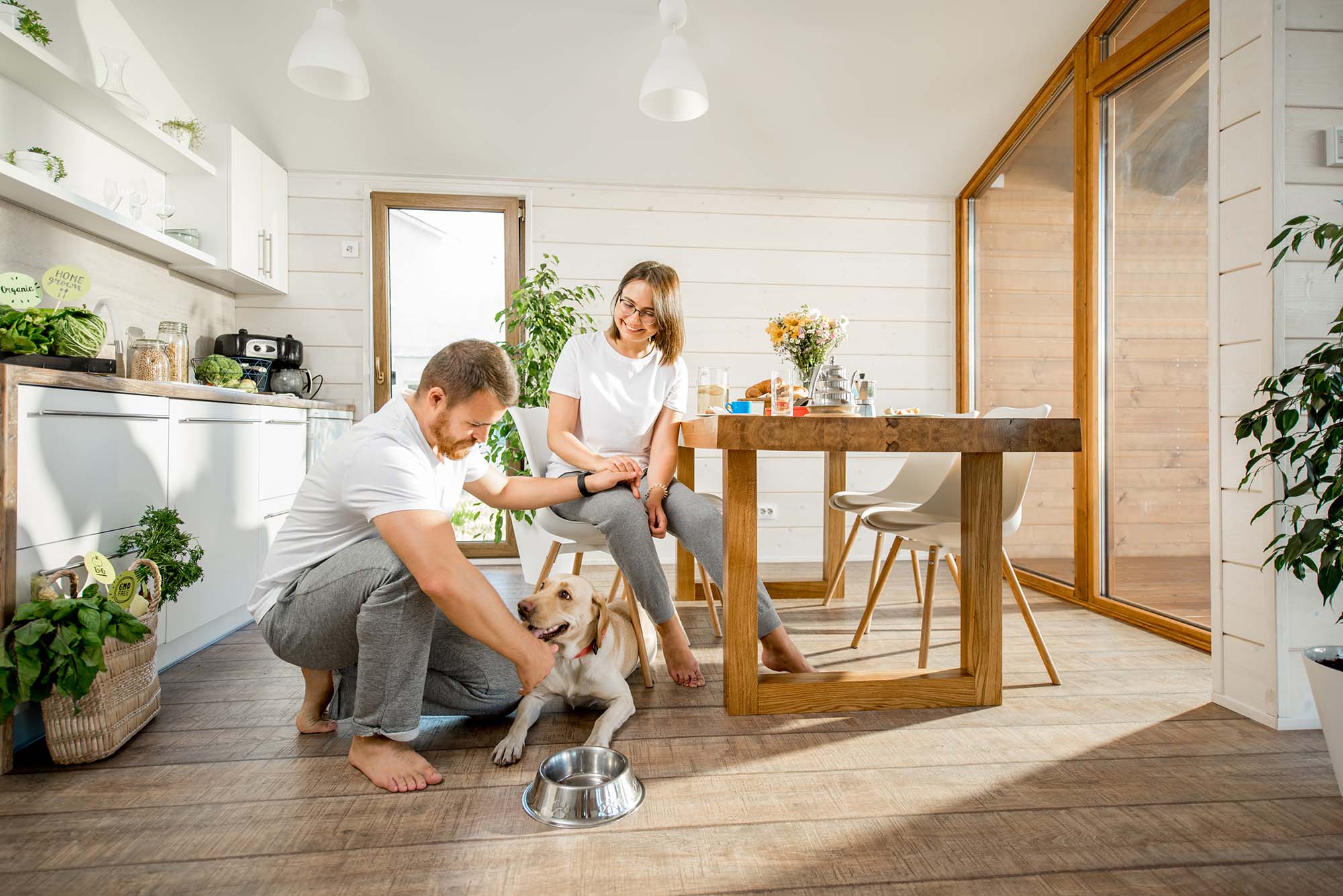
The AC rating on laminate flooring refers to abrasion class, which is a durability scale used to describe how well the wear layer resists surface wear. AC3 is often used for general residential spaces, AC4 is commonly chosen for heavier residential use and some light commercial settings, and AC5 is usually positioned for more demanding traffic. For many Chesterfield homes, AC4 can be a strong middle ground.
That said, the AC rating does not tell you everything about the floor. It mainly speaks to surface wear, not waterproofing, dent resistance, joint strength, subfloor tolerance, or how the floor will sound underfoot. A homeowner choosing laminate for pets, kids, shoes, dropped toys, and wet entryways should look beyond one number and evaluate the entire flooring construction.
Why AC4 can be a smart residential choice
AC4 laminate often makes sense in active family rooms, hallways, home offices, playrooms, upstairs bedrooms, and living spaces where the floor needs to handle steady daily movement. It gives homeowners a stronger wear surface than basic residential laminate without automatically jumping to a product that may feel overly commercial or cost more than the room requires.
For Chesterfield households with kids or pets, AC4 is useful because it helps resist visible surface wear from foot traffic and routine activity. It is not magic armor, though. Pet nails can still leave marks depending on texture and finish, furniture can still scratch without pads, and grit from shoes can still act like sandpaper. Durability still depends on cleaning habits, entry mats, and proper installation.
The pet question is more than scratch resistance
Pet-friendly laminate should be judged by texture, finish, joint integrity, and moisture protection. A slightly textured surface can help disguise small marks better than a flat glossy surface. Matte and low-sheen finishes usually hide daily wear better than shiny floors because they do not catch every footprint, paw print, or dust line under natural light.
Moisture also matters. Pet bowls, accidents, wet paws, and damp towels can test the seams of a laminate floor. Even if the product has water-resistant or waterproof claims, homeowners should ask how long the surface and locking system are protected against standing moisture. The edges and joints are often where real-life damage starts, especially near kitchens, laundry rooms, back doors, and mudrooms.
Mudrooms and entryways need a different standard
A mudroom or entryway is not just another room. It collects grit, rainwater, lawn moisture, sports gear, pet traffic, and shoes that bring in tiny abrasive particles. AC4 may be enough for surface wear, but the installation needs to be planned for moisture and debris. The right underlayment, expansion spacing, transitions, and perimeter detailing all matter.
In areas where water may sit, laminate has to be chosen carefully. Some products are better for occasional spills than for repeated wet conditions. Homeowners should not assume that a durable surface rating means the floor is automatically ideal for a damp entry. If a room regularly sees wet shoes, dripping umbrellas, or pet messes, the product’s water protection details should be reviewed closely before installation.
Why underlayment and subfloor flatness matter
A good laminate floor can feel cheap if the subfloor is uneven or the wrong underlayment is used. Floating laminate needs a properly prepared surface so the locking system can stay stable. If the subfloor has dips or high spots, the floor may flex, sound hollow, separate at the joints, or feel slightly bouncy underfoot.
Underlayment affects sound, comfort, moisture control, and how the floor feels when walked on. More padding is not always better. An underlayment that is too soft can create excess movement under a floating floor. The goal is not to make laminate feel like carpet; it is to support the locking system while managing sound and moisture according to the product requirements.
When AC5 may be worth considering
AC5 laminate may be worth considering for rentals, very high-traffic households, heavy-use hallways, home businesses, or spaces where durability is more important than warmth underfoot. It can offer stronger wear performance, but it is not automatically the best choice for every home. Some AC5 products can feel firmer, sound harder, or cost more than necessary for normal residential use.
The better decision comes from matching the floor to the room. A formal bedroom does not need the same performance as a back hallway used by kids, pets, and muddy shoes. A rental property may need a more damage-resistant product than a lightly used guest room. AC4 is often enough, but the room’s behavior should make the decision.
Final thoughts for Chesterfield homeowners
AC4 laminate flooring can be a smart choice for many active Chesterfield homes, but it should be selected with the full flooring system in mind. Wear rating, locking strength, water protection, texture, underlayment, and subfloor preparation all affect how the floor performs after installation. Costen Floors can help homeowners compare laminate options that fit real family traffic instead of relying on one rating alone.
For homeowners across Henrico, VA, Salem, VA, Richmond, VA, Virginia Beach, VA, Chesterfield, VA, and Midlothian, VA, visiting Henrico, Salem, Virginia Beach, and Midlothian, VA makes it easier to compare AC ratings, textures, plank styles, and waterproof claims in person. If you are choosing laminate for pets, kids, mudrooms, rentals, or daily traffic, contact us to talk through the best product and installation approach before you buy.


